
WELCOME BONUS 300%
UP TO €2000 + 100
FREE SPINS
UP TO €2000 + 100
FREE SPINS
Home → Blackjack
Blackjack at Casino Martin: Variants, Rules and Payouts
Statistics display saves the last 100 rounds
The statistics display records the last 100 rounds of gameplay, providing a finite window for tracking immediate session variance. This limited history prevents players from relying on short-term trends to predict future outcomes or adjust their betting strategies effectively. The finite nature of this data set ensures that recent results do not distort the long-term theoretical expectations of the game. Players must recognize that this snapshot does not guarantee future performance based on past frequency.
Blackjack Contributes Only 10 Percent to Wagering
Blackjack contributes only 10 percent to wagering requirements, significantly reducing the efficiency of table games compared to slots which contribute 100 percent. A player receiving a 300% welcome bonus up to €2,000 must generate substantially more turnover by playing Blackjack than by playing slots. For example, meeting a standard requirement through slots would require a much lower total volume than using table games due to this low contribution rate. This restriction forces players to choose high-variance slots if they intend to clear the bonus quickly without excessive bankroll depletion.
Place Side Bet before cards are dealt
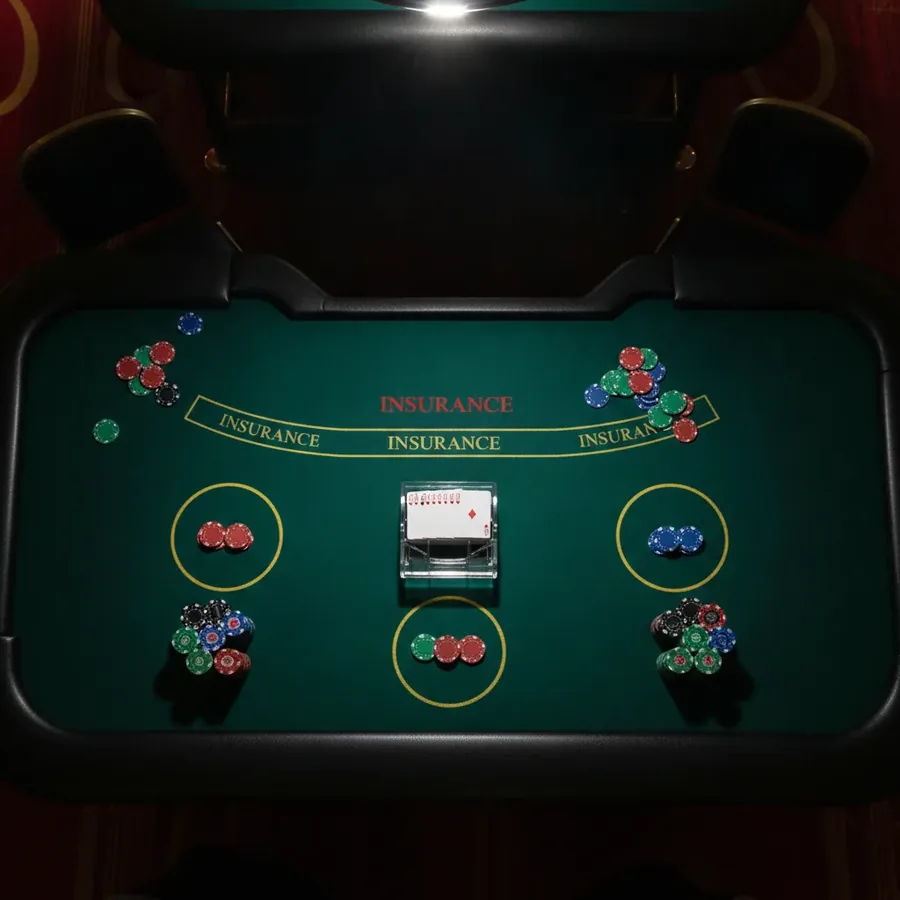
Players must place side bets before cards are dealt, such as insurance which pays 2:1 but carries a house edge of 7.47 percent. This mandatory timing prevents players from reacting to the dealer's upcard, forcing them to accept the negative expected value of the insurance wager blindly. While the payout appears attractive at 2:1, the underlying probability makes it a losing proposition over time unless card counting is employed. Most strategy guides recommend always rejecting this bet because the mathematical disadvantage outweighs the potential short-term gain.
Set session stop after 30 percent loss
Setting a session stop after 30 percent loss helps manage the risk associated with the variable house edges found across different blackjack variants. Playing Blackjack 6 Decks with a 0.46% house edge requires careful bankroll management to withstand normal statistical deviation during a session. If a player starts with €100 and loses €30, stopping immediately preserves the remaining 70% of the bankroll for future opportunities. This disciplined approach prevents emotional chasing of losses when the variance turns against the player despite optimal basic strategy usage.
Why Loss Progression Quickly Reaches Table Limit
Loss progression quickly reaches table limits because progressive betting systems amplify stakes rapidly during losing streaks, hitting maximum caps like €1,000 in Evolution tables. In Quantum Blackjack Plus Live, multipliers can reach 1,000x, but these apply only to specific winning combinations and do not negate the underlying house edge. A player increasing bets after each loss will eventually encounter the €5,000 limit in Playtech tables, rendering further doubling impossible. This structural constraint ensures that no betting system can overcome the mathematical advantage held by the casino over the long run.
Blackjack variants at a glance
| Variant | Payout | House edge | Rule | Bet range |
|---|---|---|---|---|
| Blackjack Insurance / Versicherung (6–8 Decks) | 92.53% | 7.47% | Separate Nebenwette bis 50% der Hauptwette, wenn der Dealer ein Ass hat. Basisstrategie schreibt IMMER Ablehnung vor (außer Karten zählen bei True Count ≥ +3). Bei einem Deck Vorteil ≈ 5.88% | Insurance 2:1 |
| Blackjack Liberal Vegas Strip (liberale Regeln, 3:2) | 99.72% | 0.28% | Günstigste Regelkombination: S17 + DAS + Resplit + Late Surrender. Standardabweichung 1,15 | Blackjack 3:2, Gewinn 1:1 |
| Blackjack Ein Deck, klassische Regeln, 3:2 | 99.85% | 0.15% | Weniger Decks = niedrigerer Vorteil; ein Deck gibt ca. −0.48 Prozentpunkte gegenüber 8 Decks. Oft durch 6:5 Auszahlung kompensiert. | Blackjack 3:2, Gewinn 1:1 |
| Blackjack Auszahlung 6:5 statt 3:2 (6 Decks) | 98.15% | 1.85% | Ersatz von 3:2 durch 6:5 fügt exakt +1.39 Prozentpunkte zum Vorteil des Casinos hinzu – stärker als jede andere Regeländerung. Bei $10 Einsatz zahlt Blackjack $12 statt $15. | Blackjack 6:5, Gewinn 1:1 |
| Blackjack 6 Decks, S17, DAS, DOA, Auszahlung 3:2, Basisstrategie | 99.54% | 0.46% | Dealer steht auf Soft 17; Verdopplung auf jeder Zweierkarte; Verdopplung nach Split erlaubt; keine Aufgabe. Basisstrategie ist für diesen Wert zwingend | Blackjack 3:2, normaler Gewinn 1:1, Insurance 2:1 |
| Blackjack Surrender (Late Surrender) – Regel-Effekt | n.a. (Regel-Modifikator) | −0.08 Prozentpunkte | Spieler gibt Hand nach Dealer-Blackjack-Prüfung auf, verliert die Hälfte des Einsatzes. Verbessert RTP um ca. 0.08 Prozentpunkte. Early Surrender ist wesentlich wertvoller (bis −0.6 Prozentpunkte), aber extrem selten. | Rückzahlung 50% des Einsatzes |
Live stream with three cameras and OCR
Evolution provides the Lightning Blackjack table which features a betting range from 1 EUR to 2,500 EUR for players seeking standard live dealer action. The software utilizes optical character recognition to instantly display outcomes on screen, reducing manual verification time for every single wager placed during the session. This automation ensures that payout calculations remain accurate regardless of the multiplier applied to the winning hand by the lightning mechanics.
Playtech offers Quantum Blackjack Plus Live with stakes ranging from 1 EUR to 5,000 EUR, allowing high rollers to access multipliers up to 1,000x on specific three-card combinations totaling twenty-one points. The higher limit supports larger bankrolls while the quantum feature introduces variance that exceeds standard table limits, affecting the overall return to player percentage significantly. Players must adjust their strategy to account for these random multipliers when calculating expected value over many hands.
Blackjack Party hosted by Evolution maintains a party atmosphere with two moderators and accepts bets between 1 EUR and 1,000 EUR for entertainment-focused gaming sessions. The dual-host format creates a social environment distinct from solitary play, though the RTP remains governed by the underlying mathematical rules of the variant chosen. This setup prioritizes engagement over strict statistical optimization, appealing to users who value interaction alongside the mechanical aspects of the game.
Highroller from 500 EUR per hand
Quantum Blackjack Plus Live permits maximum wagers up to 5,000 EUR per hand, accommodating high-stakes players who require substantial exposure to win large sums quickly. This ceiling is five times higher than the 1,000 EUR limit found in Blackjack Party, making it the preferred choice for serious gamblers testing bold strategies. The higher stake level amplifies both potential losses and gains, demanding rigorous bankroll management to sustain play through inevitable downswings.
Lightning Blackjack allows bets up to 2,500 EUR per round, providing a middle ground between standard tables and the highest available limits at the casino platform. Players can leverage the lightning multipliers on these significant wagers to achieve massive payouts, provided they hit the rare winning combinations with boosted coefficients. The risk associated with this limit requires careful consideration of the house edge before committing funds to any single round.
The welcome bonus structure offers 300% up to €2,000 plus 100 free spins, but table games contribute only 10% toward the wagering requirement compared to slots at 100%. This restriction means highrollers playing at 500 EUR or more per hand will find it nearly impossible to clear the bonus using blackjack variants alone. Strategic players should utilize slot machines to meet turnover conditions efficiently before attempting to withdraw winnings generated from high-limit live tables.
Splitting tens costs expected value: better stand
Standard Blackjack Liberal Vegas Strip rules allow splitting pairs, but basic strategy dictates standing on hard twenty formed by splitting tens to maximize long-term returns. Splitting tens reduces the expected value because you replace one strong hand worth approximately 50% win probability with two weaker hands starting at ten points each. This decision increases the house advantage significantly, turning a statistically favorable position into a marginal one that favors the dealer over time.
In the six-deck variant paying 6:5 instead of 3:2, the house edge rises to 1.85%, making poor decisions like splitting tens even more costly. A standard bet of 10 EUR yields only 12 EUR on a natural blackjack rather than 15 EUR, shrinking the profit margin on every successful outcome. When combined with the negative impact of splitting strong hands, the cumulative effect accelerates bankroll depletion much faster than in fairer rule sets.
Resplitting Aces improves the RTP by 0.08 percentage points, yet this benefit does not justify splitting ten-value cards which carry far greater inherent strength. The ability to split aces is limited to receiving only one additional card per ace, restricting the potential to build strong totals from those specific splits. Players should prioritize standing on tens to preserve the higher expected value inherent in the initial deal rather than risking it for marginal gains.
Which rule variants does the software show?
Blackjack Liberal Vegas Strip offers the most favorable conditions with an RTP of 99.72% and a house edge of just 0.28% under optimal play. Key rules include S17, DAS, resplitting, and late surrender, creating a combination that minimizes the casino's mathematical advantage over the player base. This variant represents the gold standard for online blackjack, requiring players to strictly adhere to basic strategy to maintain the advertised theoretical return.
A single-deck classic version provides an RTP of 99.85% and a house edge of 0.15%, offering the lowest cost of play among standard variants. However, this advantage is often negated if the game pays 6:5 for blackjack instead of the traditional 3:2 ratio, which adds 1.39 percentage points to the house edge. Players must verify the payout structure carefully, as the deck count alone does not guarantee favorable odds without checking the specific payment terms.
Insurance acts as a separate side bet paying 2:1 but carries a house edge of 7.47%, drastically reducing overall profitability for those who accept it frequently. Basic strategy advises always rejecting insurance unless counting cards reveals a true count of plus three or higher in multi-deck games. Accepting insurance randomly transforms a low-edge game into a high-cost proposition, eroding the benefits gained from other favorable rules like surrender options.
Latency under 2 seconds at the live table
Evolution's Lightning Blackjack processes bets within a tight timeframe, ensuring that the latency between placing a wager and seeing the outcome remains minimal for participants. The system handles unlimited players simultaneously while applying lightning multipliers, requiring robust server infrastructure to maintain smooth operation without noticeable delays during peak hours. Fast processing speeds are critical for maintaining engagement and preventing frustration caused by lagging interfaces or delayed result displays.
Playtech's Quantum Blackjack Plus Live operates with similar efficiency, delivering results promptly despite the complex calculation of quantum multipliers for three-card combinations. The software manages bets ranging from 1 EUR to 5,000 EUR without compromising speed, allowing high rollers to place significant wagers confidently. Consistent performance ensures that the theoretical RTP of 99.57% holds true across millions of hands, unaffected by technical interruptions or connection issues.
Blackjack Party by Evolution maintains a steady pace suitable for casual players, with no reported significant delays affecting the flow of the game despite the party atmosphere. The presence of two moderators does not hinder the automated dealing process, ensuring that each round concludes swiftly to keep the session moving forward. Reliable latency contributes to a fair gaming environment where outcomes are determined by chance rather than technological bottlenecks or server errors.
Double Down vs Simple Hit on 11
Doubling down on a hard 11 against a dealer up-card of 7 or higher is the statistically optimal move in Blackjack Liberal Vegas Strip, which offers an RTP of 99.72% and a house edge of just 0.28%. This aggressive strategy leverages the low variance of the liberal rule set to maximize expected value compared to a conservative hit. The player captures the maximum potential payout for that specific hand configuration within the game's mathematical framework.
A simple hit on 11 yields a lower expected return because it forfeits the opportunity to double the wager when the probability of drawing a ten-value card is highest. While the base game allows doubling after split, the immediate gain from doubling on 11 outweighs the flexibility of hitting. This decision directly impacts the long-term retention rate defined by the 0.28% house edge.
The consequence for the bankroll is significant: failing to double on 11 increases the effective house edge substantially over thousands of hands. Players must adhere strictly to the basic strategy outlined for this variant to maintain the theoretical 99.72% return. Deviating to a hit turns a positive expectation scenario into a neutral or negative one relative to the optimal play.
Card Counting at Shuffle Master Table: why it fails
Quantum Blackjack Plus Live utilizes continuous shuffling mechanisms that reset the deck composition after every single round, rendering traditional card counting techniques mathematically useless. This live dealer format from Playtech operates with an RTP of 99.57% under optimal strategy, but the shuffle integrity prevents any tracking of high or low cards. The constant reshuffle ensures each hand is an independent event with fixed probabilities.
Unlike static shoe games where a high true count might justify increased bets, the Quantum table maintains a constant distribution regardless of previous outcomes. The inclusion of Quantum multipliers up to 1,000x on three-card combinations introduces volatility that further decouples past results from future expectations. Counters cannot exploit favorable decks because no deck ever accumulates them.
The result is that players relying on counting systems will see their edge vanish instantly upon entering this specific live environment. Wagering strategies based on card depletion are ineffective here, forcing reliance on standard basic strategy for the 99.57% RTP. The payout structure remains fixed, indifferent to any perceived streaks or counts.
Although Lightning Blackjack from Evolution also features dynamic elements, its fixed shoe rounds allow for limited counting opportunities if the penetration is deep enough, unlike the continuous shuffle of the Quantum variant. This distinction highlights why table technology dictates the viability of advantage play methods.
When can you increase your bet?
Players may increase their wager during the doubling phase, known as Double After Split (DAS), which is permitted in the Blackjack 6 Decks variant featuring S17 rules. This rule allows the player to double the original stake once more after splitting pairs, provided they receive only one additional card. It effectively multiplies the exposure to the 0.46% house edge on those specific hands.
The ability to double down applies broadly across almost all two-card totals in this variant, offering frequent opportunities to capitalize on favorable dealer up-cards. This flexibility contrasts sharply with restrictive tables that limit doubling to only 9, 10, or 11 points. The DAS rule contributes approximately -0.14 percentage points to the house edge, improving player odds.
Consequently, the total amount risked per session can escalate rapidly if a player engages in multiple splits followed by doubles. A sequence of four splits and subsequent doubles could theoretically multiply the initial unit wager significantly before the hand concludes. This mechanic demands strict bankroll management to withstand the associated variance.
In contrast, Blackjack Surrender does not permit bet increases but instead offers a partial recovery mechanism. This alternative strategy limits losses rather than amplifying potential gains through doubled wagers.
Error insurance: 7 percent additional house edge
Taking insurance on a six-to-eight-deck shoe incurs a massive house edge of 7.47%, drastically reducing the overall return to player. This side bet pays 2:1 if the dealer has a blackjack, but statistically, it loses far more often than it wins for the average participant. Accepting this wager transforms a strong 99.85% RTP game into a significantly poorer investment vehicle.
The cost of this erroneous bet is calculated as an additional drag on the bankroll equivalent to half the original wager multiplied by the frequency of dealer blackjacks. For a 100 EUR main bet, a full insurance bet of 50 EUR faces a 7.47% disadvantage. This erodes the primary advantage gained from playing single-deck or liberal variants.
The financial consequence is a severe degradation of long-term profitability, as the 7.47% edge dwarfs the base game's minimal house advantage. Players adhering to basic strategy should always decline insurance unless holding a specialized counting system with a true count of +3 or higher. Ignoring this rule leads to rapid capital depletion.
Even in single-deck scenarios where the edge drops to approximately 5.88%, the bet remains highly unfavorable for non-counters. The payout ratio of 2:1 fails to compensate for the actual probability of the dealer holding a ten-value hole card.
Splitting Eights vs Standing on 16
Standing on a hard 16 composed of two eights represents the worst possible outcome in terms of expected loss against most dealer up-cards. By refusing to split, the player commits to losing nearly half their stack on average due to the high bust probability of drawing any ten-value card. Splitting eights breaks this weak hand into two potentially strong starting positions.
The act of splitting eightes converts a guaranteed loser into two separate hands beginning with an 8, allowing for doubling or hitting opportunities. This strategic correction is vital in variants like Blackjack Ein Deck, where the house edge sits at a low 0.15%. Maintaining a 16 sacrifices the mathematical advantage inherent in the split decision.
The monetary impact is substantial: keeping the 16 guarantees a higher rate of fund erosion compared to the split strategy over time. Each split hand carries its own risk profile, but the aggregate expectation favors the division. Players ignoring this rule surrender value equivalent to the difference between the 0.15% edge and the much higher disadvantage of standing.
This principle holds even in less favorable conditions, such as the 6-deck game with a 0.46% house edge. The structural weakness of a 16 makes splitting the only viable path to preserving capital.
Contact
Live - online chat
Banking









Providers












Martin Casino 2026